






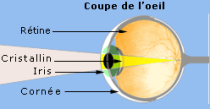
Cataract disease is characterized by clouding of the lens.
In the absence of cataract, and in a patient with no visual defect, the lens is transparent.
Thanks to the phenomenon of accommodation of the lens, near vision is made possible — even when the object is close to the eye — by adjusting the curvature of the lens.
Cataract is the loss of transparency of the lens, which transmits images less effectively.
The cataract blurs the perception of images and colors and is responsible for a progressive loss of vision.
Cataract disease may be congenital — of hereditary origin — traumatic, resulting from a blow to the eye, or secondary to severe eye infections.
However, it most often develops gradually with age due to the natural aging of the lens.
Some factors, however, can worsen or accelerate the disease: exposure to ultraviolet light, smoking, alcoholism, diabetes, and certain treatments (prolonged corticosteroid therapy) or metabolic disorders.